
Leading a family-owned SME: when decisions become personal
- 01/06/2026
- Vanessa GBIKPI
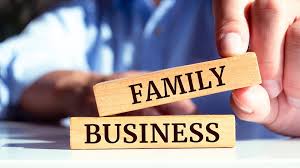
One decision, multiple levels of exposure
Family-owned businesses occupy a central place in the global economy. According to PwC’s Global Family Business Survey 2025, they account for nearly 70% of global GDP and represent a major share of Europe’s entrepreneurial landscape[1].
But their singularity is not only a matter of economic weight. It stems from a structural reality: in these organisations, decisions and decision-makers are never entirely separate.
In practical terms, in a family-owned SME, a strategic decision simultaneously affects:
- economic performance;
- external perception;
- internal dynamics;
- and, often, personal factors that are far harder to formalise.
Unlike large organisations, where responsibilities are distributed across multiple layers of governance, leaders of family-owned SMEs often bear the consequences of their choices directly.
This overlap is what turns certain decisions into particularly high-exposure moments.
When the leader’s reputation enters the equation
In a family business, reputation is not just another asset.
It is capital built over time – often carried by a name, a legacy, and a sense of continuity.
According to the Edelman Trust Barometer 2025, companies remain the most trusted institution globally – but expectations of leaders in terms of consistency, accountability, and transparency continue to rise[2]. Stakeholders now expect greater consistency between decisions made, values stated, and the way crises are managed.
A poorly calibrated decision – an ill-judged communication, a partnership that backfires, a reaction that comes too late – can have immediate and lasting effects: loss of credibility, internal tensions, weakened key relationships, and the strategic direction being called into question.
And in a family-owned SME, this exposure is twofold: it affects not only the business, but also its leader.
Trust is no longer decreed. It is built and confirmed, decision by decision.
When the company’s interests and the family’s interests clash
What makes certain decisions particularly difficult is not their technical complexity alone.
It is the moment when several legitimate logics become impossible to fully align. Growth vs. exposure.
Performance vs. internal cohesion.
Rational decision vs. reputational impact.
Short-term protection vs. long-term trajectory.
In those moments, the leader is no longer managing an operational issue.
They are weighing multiple types of stakes – economic, human, reputational, organisational – each leading to different consequences.
And above all, they must do so with information that often remains incomplete.
This is precisely what makes these arbitrages so difficult to carry alone.
This layering of competing logics points to another limitation – more structural in nature.
The structural limits of classical approaches
The difficulty does not necessarily stem from a lack of expertise around the leader.
Lawyers, accountants, financial advisors, long-standing partners, or board members all play an essential role.
But in the most exposed situations, when stakes overlap, another limit appears: each advisor naturally analyses the situation through their own remit – shaped by responsibilities, operational constraints, relationships, and risk frameworks.
Yet some decisions go far beyond those boundaries.
They simultaneously involve strategic, human, reputational, organisational – and sometimes personal, asset-related – stakes that no single actor fully holds.
It is often at this point that leaders realise that, despite the quality of the people around them, they are still alone when it comes to the final call.
This is consistent with what several BCG studies on decision-making under uncertainty highlight: the most resilient organisations are not those that accumulate the most information, but those able to rapidly integrate interdependent stakes and arbitrate under uncertainty.[3]
Most family-owned SMEs and mid-sized companies lack the governance structures that would allow this integration to happen collectively. As a result, that responsibility falls – almost always – on a single person: the leader.
Deciding when everything is at stake
In a family-owned SME, some decisions cannot be simplified.
Because they simultaneously involve multiple layers of reality: strategy, reputation, human dynamics, external credibility, and a personal trajectory – the leader’s very identity.
Their effects extend well beyond the immediate. And some, once made, become extremely hard to undo.
In those moments, the difficulty is no longer simply identifying the most rational decision.
It lies in determining which decision the leader is genuinely prepared to own – along with every consequence. “Which decision am I prepared to take accountability for, with all its consequences?”
Not to decide in the leader’s place, but to ensure the decision is fully worked through before it becomes irreversible.
Conclusion
What distinguishes resilient leaders who come through these moments unscathed is not that they avoided hard decisions. It is that they worked through them before committing – across all their dimensions, including the hardest to name.
This is the work BEL PARTNER supports – upstream, independently, and in confidence – so that each arbitrage is made with full clarity on what is at stake.
If this article resonates with your situation, we would be delighted to speak with you.